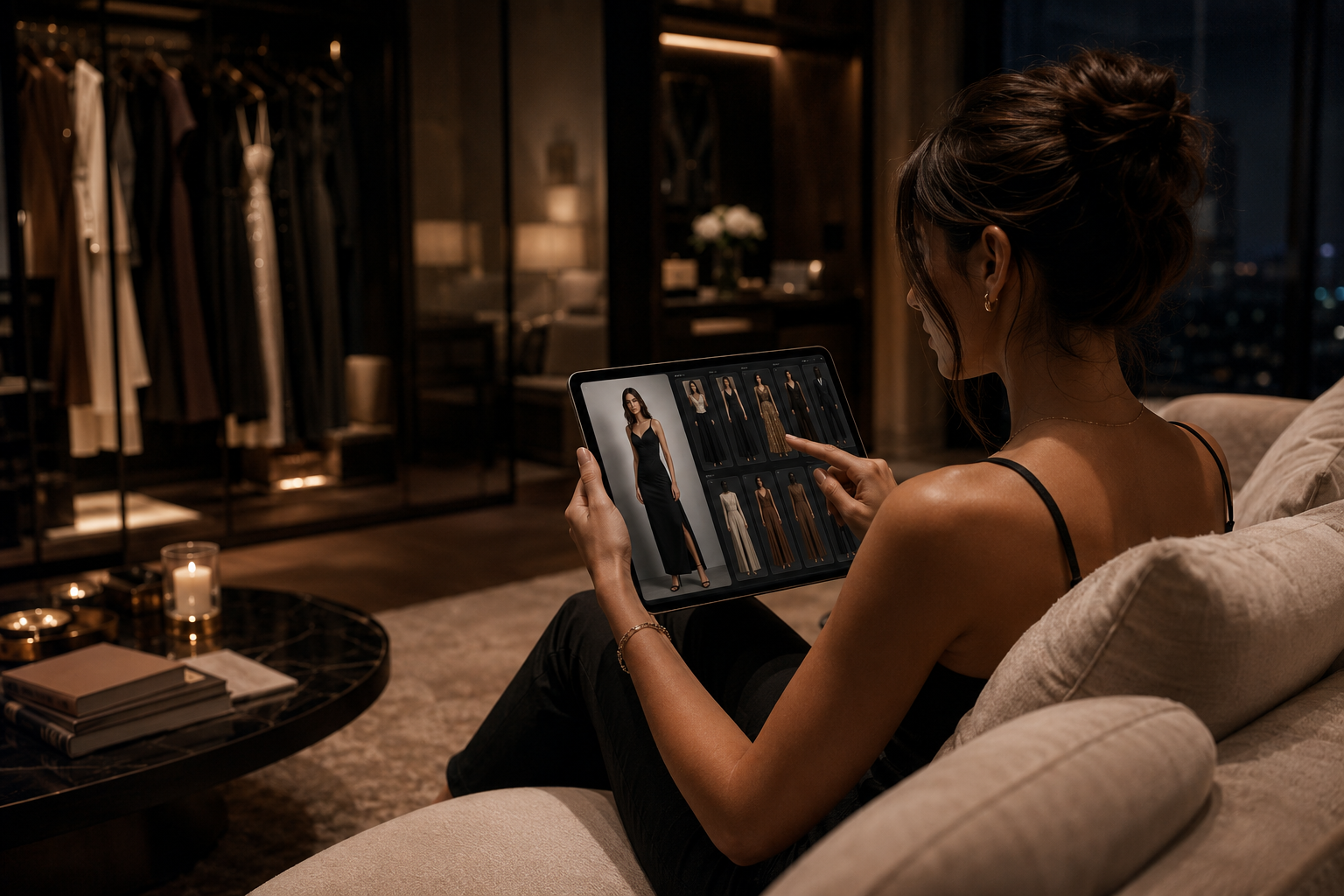
Recommendation engines have been part of eCommerce for more than two decades. Amazon’s “customers who bought this also bought” launched in 2001. It set the template for the whole industry. Today the global recommendation engine market is worth more than $7 billion and growing. Nearly every fashion retailer of scale runs some form of product recommendations.
And yet most shoppers can sum up the experience fast. Items they already own. Versions of what they just looked at. Products that are related on paper but wrong for their style. The same ten pieces in the carousel every session.
The fashion recommendation problem is not a data problem. Retailers have more behavior data than ever. It is a signal problem. What these engines measure does not match what fashion shoppers need.
What recommendation engines were built to do
Most recommendation systems were built for commodities. These are goods where price, availability, and past use drive the choice. Say you bought a coffee brand and then a coffee maker. Collaborative filtering spots that pattern and repeats it for other users. It works because coffee and coffee makers go together for almost everyone.
Fashion is different in nearly every way that matters. A cream blazer and wide-leg trousers do not have a fixed link. The link is about style. It depends on proportion, color, occasion, season, taste, and the rest of her wardrobe. Two shoppers can share the same age, price point, and history, and still have opposite taste. These engines assume similar behavior means similar taste. In fashion, that breaks.
The result is the experience shoppers know. Recommendations that feel generic. Related on a chart, useless for styling. More of the same, with no help on what goes with what.
The three failure modes
Legacy engines fail fashion in three ways.
The cold start problem. These systems need history to work. A new arrival has no data yet. It cannot be recommended on co-purchase or co-view patterns, because those patterns do not exist. In fashion, catalogs turn fast and newness sells. So the items that need exposure most are the ones the system can surface least.
The long tail problem. Fashion catalogs are deep. A retailer with 50,000 SKUs makes most of its data around a few bestsellers. The rest sits in the long tail with too little data to recommend. So the system pushes what is already popular. That repeats popularity and hides most of the range. It is expensive too. Those long-tail products carry margin and inventory cost, and they never get styled into a look.
The context collapse problem. Behavior engines cannot read context, the why behind a session. A shopper bought a cocktail dress last month. Now she is browsing weekend casual. The system treats her as the same person with the same intent. The occasion and the gap she is filling stay invisible. It reads only what she did, not what she is trying to do.
Each one ends the same way. Recommendations aimed at a demographic, not a person.

The signals fashion actually requires
An engine that works for fashion needs a different signal set. Not just what shoppers did. Also what they are doing, what they want, and how products relate as a look. Those signals sit across four areas.
Browse and styling behavior. The choices a shopper makes while building a look are far richer than a browse click. She picks a jacket, drops it for another, then pairs it with a specific trouser and a boot, not a sneaker. That sequence shows real taste. It is intent at a detail that page views and purchase history cannot reach.
Product type and combination logic. Fashion recommendation needs to know how categories relate. Tops relate to bottoms in set ways. Outerwear layers over an outfit. Footwear is chosen against the shape of the whole look. An engine that knows the catalog at this level can build combinations that follow real styling logic, not chance.
Occasion intent. The occasion is the strongest context signal, and the one old systems capture worst. A work meeting, a weekend trip, a wedding, a casual night. Each shapes formality, color, shape, footwear, and accessories. An engine that reads occasion can recommend with a precision generic engines cannot match.
Purchase in context. A purchase made after a full look is assembled means more than one made off a listing page. It is a confirmed style choice inside an outfit. Over time, it builds a profile of how a shopper actually dresses, not just what she once clicked.

What this data foundation makes possible
Together, these signals enable a class of recommendations old engines cannot deliver.
Real-time personalization. The system reads live styling choices, not just history. So it adjusts as the session runs. A shopper who starts casual and moves to something dressier is shifting. A live engine follows the shift. This is personalization at the session level, not the segment level.
Complete-look intelligence. The engine knows how products relate as a look. So it surfaces items that finish an outfit, not items that are simply popular. Not “shoppers who bought this jacket also viewed this jacket.” Instead: “this jacket, in this proportion and color, is finished by these pieces.”
Long-tail activation. It recommends on product type and styling logic, not popularity. So it can surface long-tail products that fit the look being built. A new arrival can appear the day it lands, matched to looks that fit its style. Old engines would need months to earn that exposure.
Fewer filter bubbles. Old engines show more of what a shopper has already seen. A styling-aware engine can introduce new categories and products, because the pick is driven by outfit logic, not by her past.
The data compounding effect
The advantage grows with scale. Every look built on the platform makes data. Which combinations worked. Which occasions drove which buys. Which product types paired well. As that adds up across the shopper base, the engine improves. The styling logic sharpens. The occasion signals get sharper. Even a new shopper’s first session is better, because the model starts from a richer base.
This is the moat behavior engines cannot copy. Behavior data tells you what happened. Styling data tells you why, and what it means next.
The recommendation engine fashion has been waiting for
The fashion recommendation problem has been misread as a scale problem. The idea was that more data, more compute, or better filtering would fix quality. But more data from the wrong signals does not fix the core mismatch.
The category needs a different engine. One that reads the look, not just the product. One that reads occasion, not just history. One that recommends on how items work together in real life, not just how they were co-viewed in a log.
That is what an outfit recommendation engine does. It is what Zelig’s AI Commerce Suite is built to deliver: a data foundation that captures the signals that matter, real-time personalization, and styling intelligence that turns the catalog from a product list into a living wardrobe.
See the outfit recommendation engine on a live catalog, or read the production results. Explore the experience.