The fashion return problem has a familiar villain: sizing. Ask a retail team how to reduce fashion returns and the instinct is to check the size chart, the fit model, the sizing tool. That makes sense. Fit is measurable and fixable, and the industry has built a whole category of technology around it.
But sizing is only part of the story, and focusing there alone leaves the bigger problem unsolved. To reduce fashion returns in a way that actually moves the number, you have to solve the returns that have nothing to do with fit. This piece is about AI styling for fashion retailers, and about the half of the problem the industry has left alone.
The National Retail Federation’s 2025 Retail Returns Landscape report projects total retail returns of $849.9 billion, with online returns running at 19.3% of sales across all categories. In fashion and apparel, that climbs to 25% to 40%, and some specialty retailers report rates above 50%. McKinsey puts the share of fashion returns tied to fit and style at about 70%.
Fit and style. Not just fit. That distinction is the whole point. The industry has poured money into the fit side: 3D body measurement, size recommendation engines, virtual fitting rooms. Those tools solve a real problem. But style-mismatch returns, the shopper who kept the size but sent the item back because it did not work with anything she owns, or did not suit the occasion, are mostly unaddressed. That gap holds a large share of return volume, and almost no one owns it.
The problem sizing tools don’t solve
 Sizing tools answer one narrow question: will this garment fit this body? That is solvable with measurements, size charts, fit history, and construction data.
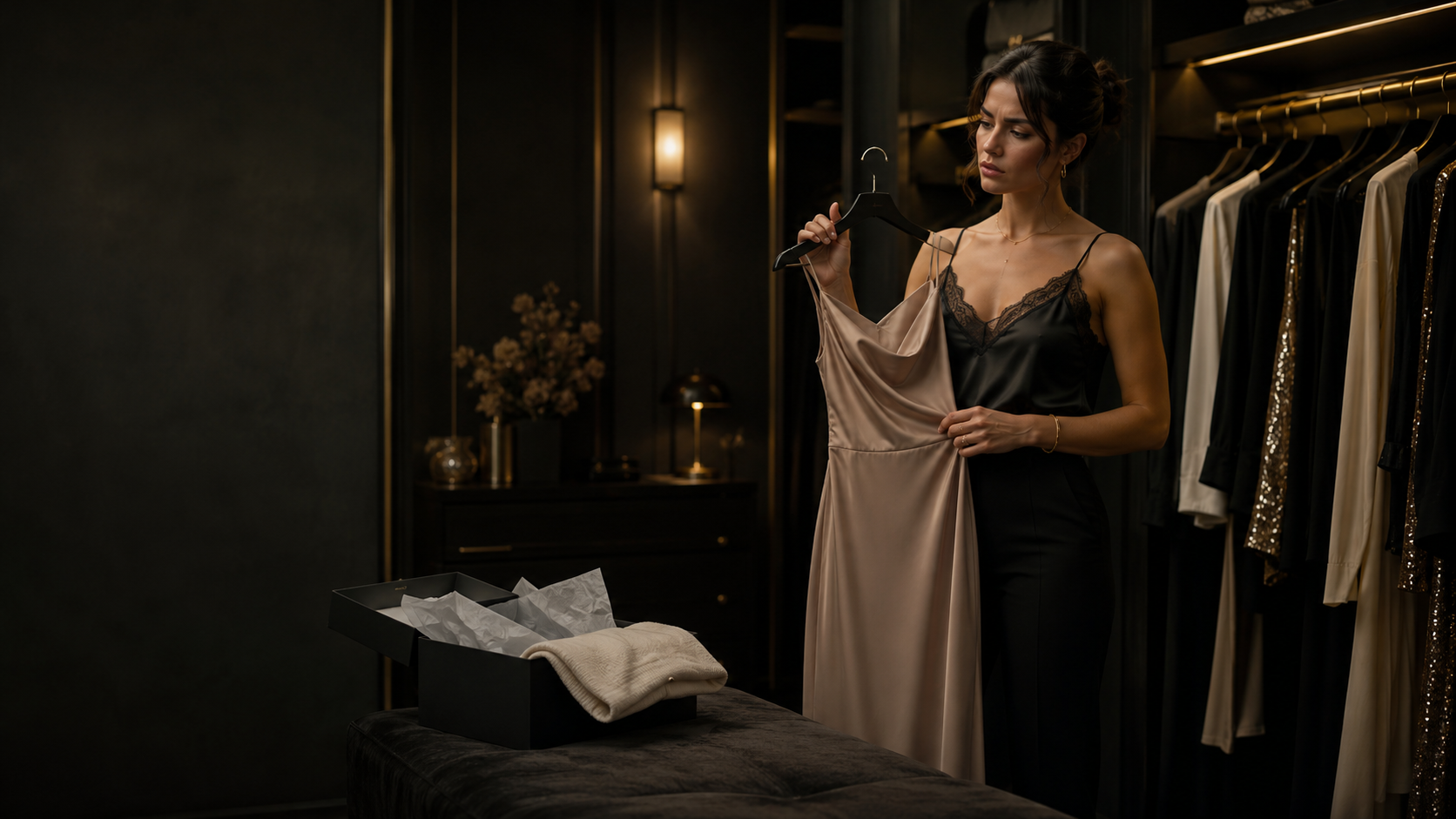
Style mismatch is a different problem. The shopper knew it would fit. She returned it because, in the context of her real wardrobe, her life, and the occasion, it did not work. The item was right on its own. It was wrong as part of the whole picture.
That is a confidence problem, not a measurement problem. And it is built into how eCommerce shows product. The standard product page shows a garment on a model or a white background. It shows the item. It does not show what the item becomes in a full outfit. It does not show how the jacket pairs with the trousers, how the dress reads at the event, or how the new piece fits the wardrobe she already owns. She fills those gaps with imagination, and imagination is unreliable. So she buys, the item arrives, the picture in her head was wrong, and it goes back. We cover the product-page side of this in why your product detail page works against you.
What the return rate actually costs
The $849.9 billion figure is industry-wide, and its scale can feel abstract. The operating reality is concrete.
Take a retailer doing $500 million in online revenue at a 30% return rate. That is $150 million in merchandise coming back every year. Behind each return sits inbound shipping, inspection, processing, restocking or liquidation, and the lost margin on a sale that cost money to win. Industry estimates put the cost of processing a single fashion return at $20 to $30, before the margin hit.
At scale, returns are one of the biggest line items in fashion eCommerce, and they get a fraction of the attention that acquisition or conversion do. The industry spends billions driving traffic in, and comparatively little solving the problem that erodes what the funnel produces. Style-mismatch returns are especially costly because they are largely preventable. A wrong sleeve length may be a real sizing failure. A shopper who returns an item because she could not figure out how to wear it is an experience failure, one a better pre-purchase experience could have solved.
How AI styling helps reduce fashion returns
 Solving style-mismatch returns means giving shoppers what they lack before they buy: a credible, visual answer to whether the item works as part of a complete look.
AI styling does that. It turns the product page into an interactive styling space. The shopper selects an item and starts building a full outfit, pulling matching pieces from the live catalog and seeing them assembled on a model in real time, before she buys.
The mechanism is direct. When a shopper has built and visualized a complete look before buying, she buys with confidence that goes past “does this fit?” to “does this work?” That shift closes the gap between expectation and reality, which is exactly where style-mismatch returns live. The effect shows up in production: in Zelig’s live deployment with Revolve, across more than 54,000 SKUs, returns fell 10% while conversion and average order value rose. You can see the full case in our results.
Bracketing and the uncertainty tax
There is another angle to reduce fashion returns that styling reaches directly. A large share of return volume comes from bracketing: buying several items meaning to keep one and return the rest. NRF data shows nearly two-thirds of consumers do this.
Bracketing is a rational response to uncertainty. If you cannot tell which version works, you buy them all and decide at home. AI styling cuts the uncertainty that drives bracketing by giving her the information to decide before she buys. It is the same confidence mechanism working on a different behavior, and it comes from real styling logic, not a recommendation carousel. We explain that difference in our guide to the outfit recommendation engine.
Why this is the right moment to solve it
The NRF’s 2025 numbers show a return problem that is not fixing itself. Online return rates have stayed high despite years of work on logistics, policy, and measurement. The retailers who cut returns meaningfully are the ones who fixed purchase confidence at the source, before the item ships.
There is also new pressure from an unexpected direction. As AI tools spread across how people shop, in retailer sites, AI agents, and chat interfaces, shoppers’ patience for uncertainty is falling. They now expect a complete, visual, personal picture of how a product will look and work before they commit. Retailers that cannot meet that will watch returns keep rising, as decisions get made with less information than before.
The returns problem has a better answer than the one the industry keeps applying. Sizing matters. But the shopper who knows her size and still returns the item because she could not picture how it worked is the one the industry has left alone. She is also the one AI styling is built for.
Frequently asked questions
What is the biggest cause of fashion returns? Fit and style together account for about 70% of fashion returns, per McKinsey. Sizing tools address the fit half. Style mismatch, when a shopper keeps the size but returns the item because it did not work with her wardrobe or the occasion, is largely unsolved.
How does AI styling reduce fashion returns? It lets a shopper build and see a complete outfit before buying, so she buys with confidence that the item works, not just that it fits. That closes the expectation gap where style-mismatch returns come from.
Does styling help with bracketing? Yes. Bracketing is driven by uncertainty. When a shopper can see which pieces work before she buys, she has less reason to order several versions and return the rest.
See how Zelig helps reduce fashion returns by building confidence before the buy. Read the Revolve results, or book a demo.