
Your search team improved relevance. Your recommendation vendor reported a lift. The new product pages look better. You can defend every purchase in your fashion ecommerce stack, yet a shopper who likes a jacket still has to work out the rest of the outfit herself.
That’s the cost worth looking at. You’ve paid to help her find the piece. Then you leave her to decide whether she can wear it.
A better stack carries that decision from one step to the next. The work is in connecting what you’ve already bought around the shopper’s task, rather than adding another tool with its own success report.
The shopper does the work between your tools
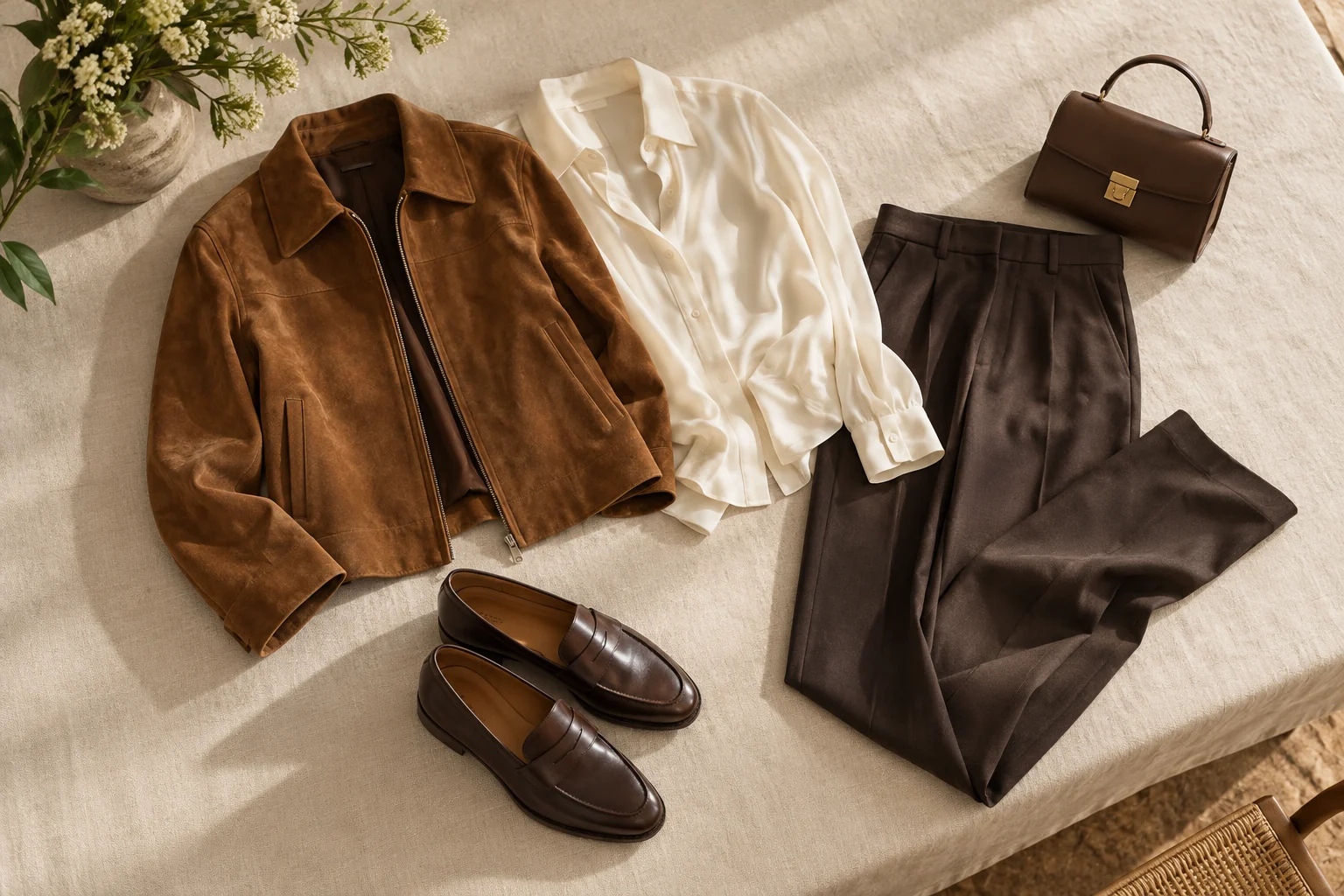
Take a simple brief: a jacket for dinner, dressed up enough to feel considered, relaxed enough to wear again. Search gets her to a camel blazer. The product page has good photography, clear fabric details and the right size in stock.
Then the page offers four more blazers.
Those alternatives might be useful if the first one isn’t right. But she likes this one. Now she wants to know which trousers go with it, whether the shoes make it too formal, and what she can swap without losing the look. Each answer sends her into another category, another product page, another set of filters.
The systems can all be working as designed while she does the job of a stylist, moving between pages. A retailer can see clicks and still miss the moment the shopper loses interest.
What fragmentation costs your fashion ecommerce stack
The invoice for a tool is easy to find. The work created between tools is harder to price, because it rarely belongs to one team. Look for it in three places.
- The shopper’s effort. She has to remember the starting piece, compare items across tabs and picture how they work together. Every new page gives her another decision to make.
- Your team’s time. Merchandisers rebuild looks when stock changes. Engineers handle each new integration. Analysts spend the readout agreeing on which shoppers and events the reports describe.
- The choices you don’t learn from. A swapped shoe or a saved outfit can tell you more about taste than a product view. If that choice stays inside one tool, it can’t help the next experience unless you’ve made a path for it.
None of that means every integration is broken. It means the cost of the stack includes what people must do to make its parts work together. Count that work alongside the license fees.
Keep discovery and styling connected
Search and recommendations still have jobs to do. A shopper who doesn’t like the jacket should be able to find another one. A shopper who does like it should be able to finish the outfit.
Baymard’s product-page research makes a useful distinction: alternatives help people find the right item; complementary suggestions help them find things to go with it. Both are useful, and the page should make their purpose clear.
For fashion, styling takes the second job further. It shows how the pieces work as a look, lets the shopper change what doesn’t suit her, and keeps the starting item in view. Our guide to AI styling for fashion retailers covers that experience in more detail.
The question for your stack is practical: can the shopper move from finding something she likes to building a look around it without starting over?
Start with one shopping task
You don’t need to replace every system to answer that question. Start with a task you can watch someone attempt on your site. Build an outfit around a jacket. Find shoes for a dress. Adjust a look for work instead of dinner.
Follow it on a phone as well as a laptop. Note where the shopper has to repeat a choice, lose her place or leave the piece she came for. Then ask the teams who own those steps what they need to keep the experience together.
That discussion should get specific. Which product is the look built around? Which sizes are available? How does a change in stock reach the styling experience? Which choices can you retain with the shopper’s permission, and where can your team use them?
Real-time data is useful when it changes what the shopper can do. A feed that’s technically connected but still shows an unavailable item hasn’t done the job.
Give someone the whole outcome
Keep the specialist teams. Give one person responsibility for the shopping task across them.
Agree what you’ll measure before the next change goes live. Completed purchases matter. So do items per order, margin after returns, and the time your team spends maintaining the experience. Extra clicks can help diagnose what happened; they don’t settle whether the change earned its cost.
When you test a new experience, compare the traffic assigned to it with the traffic assigned to the current version. A report comparing people who chose to use styling with people who didn’t can describe those groups. It can’t, on its own, show what styling caused.
That gives you a more useful discussion than another round of vendor scorecards. You can see whether shoppers finished the task and whether the business benefited.
Buy the connection you’re missing
Before you add another tool, ask its team to walk through that same task on your catalog. Ask what it needs from your current systems, what it gives back, and who maintains the connection when the catalog changes.
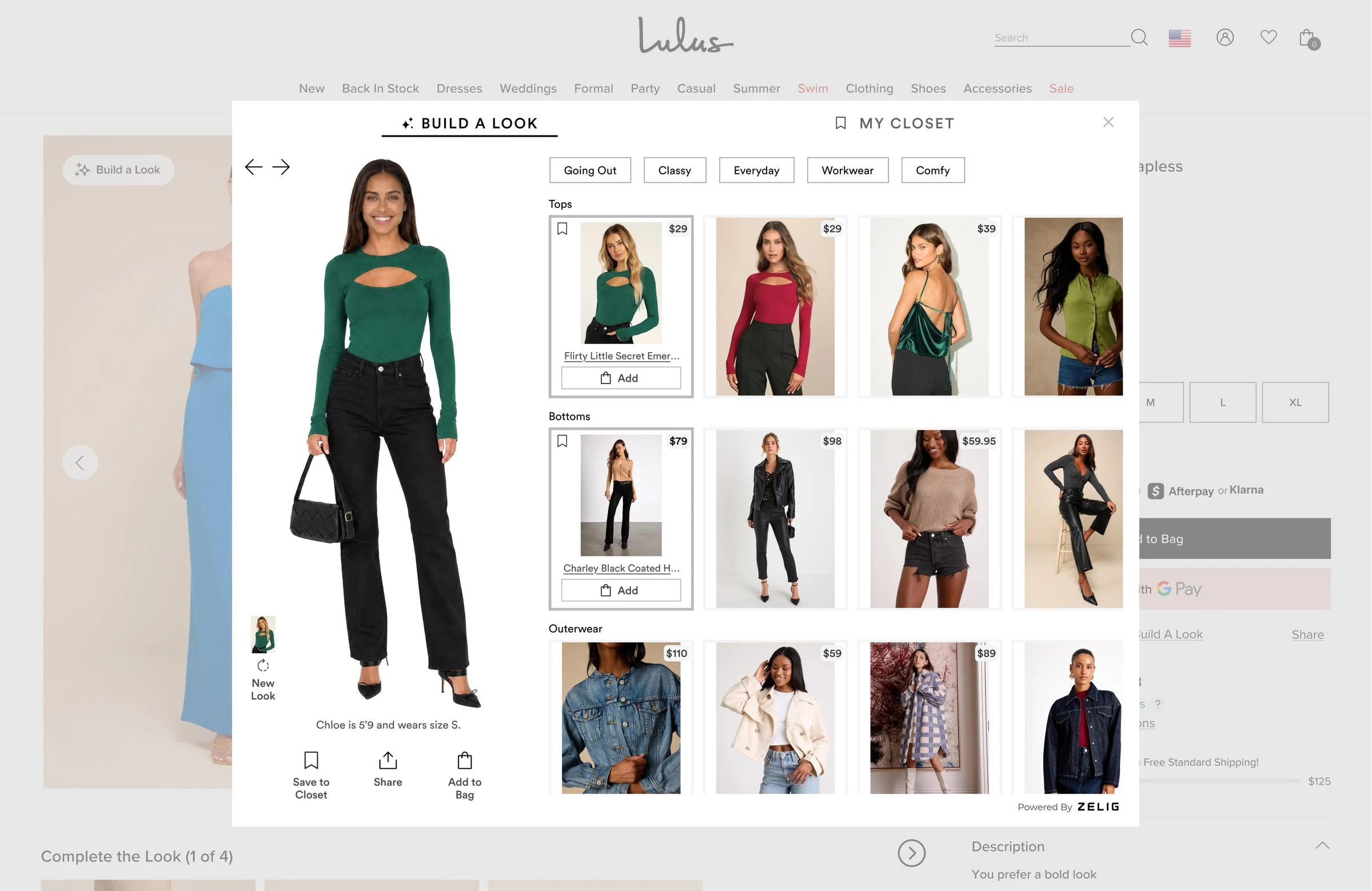
Zelig’s styling platform brings live-catalog outfit building into the shopping experience. The Lulus deployment shows what that can look like inside a retailer’s storefront.
You may already have enough tools to find the jacket. The next investment should help the shopper wear it.
Bring one shopping task from your site. We’ll show you how styling could fit into the path you already have.